
Most small businesses do not have a marketing problem. They have an execution problem. The strategy usually exists in pieces – post on social media more often, rank higher on Google, update the website, send emails, ask for reviews – but nobody has the time to run it consistently. That is where a small business digital marketing guide becomes useful. It turns scattered effort into a focused system built to drive visibility, traffic, leads, and sales.
For local business owners, the goal is not to be everywhere. The goal is to show up in the right places, say the right things, and make it easy for people to take the next step. A good digital marketing plan should support revenue, not create more work.
What this small business digital marketing guide should help you fix
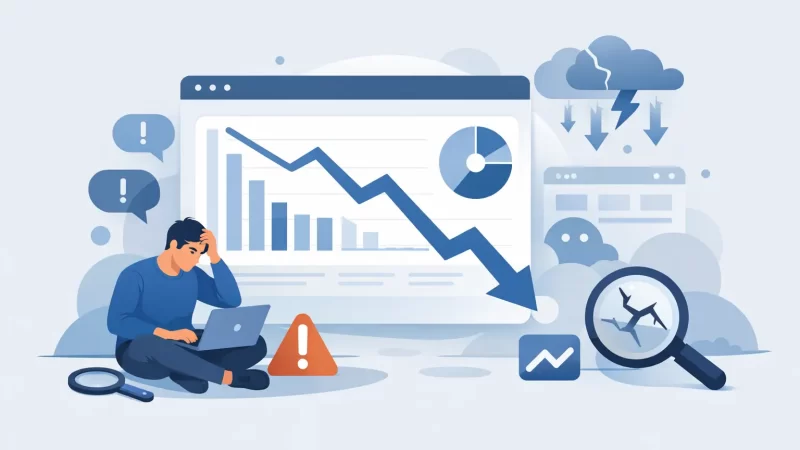
If your website traffic is flat, your social posting is inconsistent, or your rankings are stuck, the issue is rarely one single channel. More often, the problem is that your digital presence is disconnected. Your website says one thing, your social pages say another, and your content does not build momentum over time.
That disconnect costs real business. A potential customer might find your business profile, click through to your website, and leave because the page is outdated, slow, or unclear. Or they may see your social media page and assume you are inactive because the last post was three months ago. Small gaps like that can weaken trust before a conversation even starts.
The fix is not more random marketing activity. It is a simpler system with clear priorities.
Start with visibility, not vanity
A lot of small business marketing advice overemphasizes follower counts and broad awareness. For most local businesses, visibility matters more than vanity metrics. You need to appear when someone searches for your service, compares providers, or checks whether your business looks credible.
That means your first priorities should usually be search presence, website performance, business profile management, and a consistent content schedule. Social media matters too, but mainly when it supports trust, local awareness, and repeat engagement.
This is where many owners lose time. They spend hours choosing post ideas while their service pages are thin, their site is missing location relevance, or their calls to action are vague. The return is usually much better when the foundation is fixed first.
Build your marketing around four core assets
Every practical small business digital marketing guide should center on assets you control. Algorithms change. Platforms shift. Your business still needs a stable base.
The first asset is your website. It should clearly explain what you do, where you serve, who you help, and how to contact you. It should load quickly, work well on mobile, and guide visitors toward a quote request, call, booking, or visit.
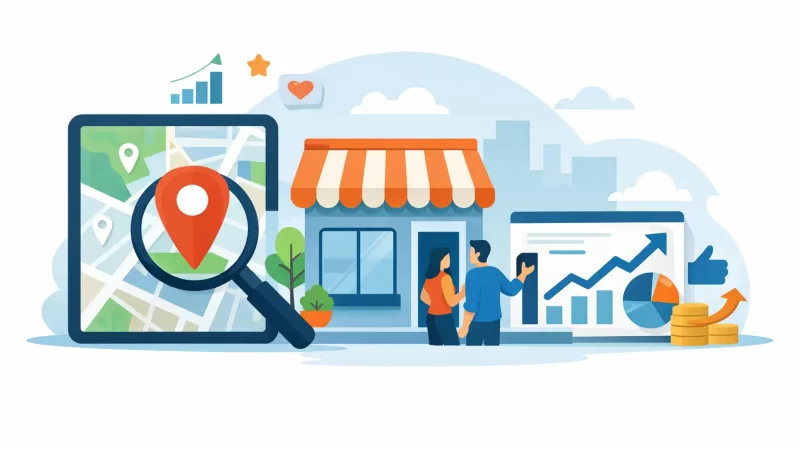
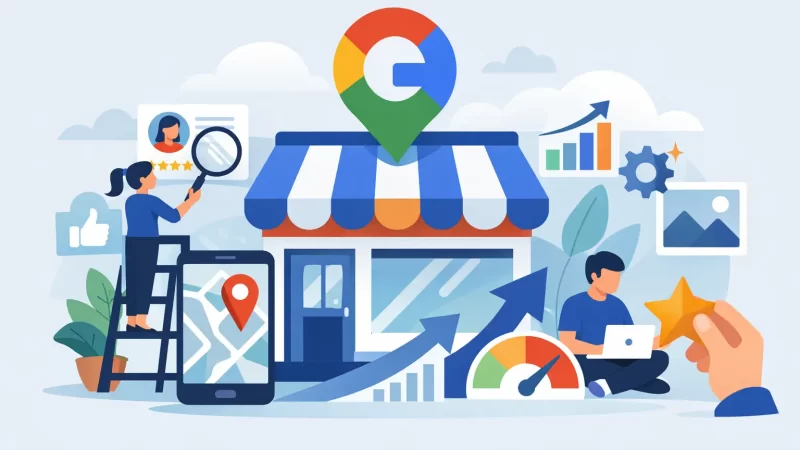
The second is your local search presence. That includes your business listings, reviews, map visibility, and location signals across your site. For service businesses and brick-and-mortar companies alike, local search often drives some of the highest-intent traffic.
The third is your content. Useful website content gives search engines more context and gives customers more reasons to trust you. This can include service pages, city pages, FAQs, blog articles, and supporting website copy. Content works best when it is planned around real search demand and customer questions, not guesswork.
The fourth is your social media presence. It does not need to be constant or flashy. It needs to feel active, credible, and aligned with your brand. A quiet but consistent account usually performs better for trust than an account that posts heavily for two weeks and then disappears.
Your website should convert, not just exist
Many small business websites are treated like digital brochures. They have the basics, but they do not move people toward action. A visitor should be able to answer four questions quickly: What do you offer? Is it relevant to me? Why should I trust you? What do I do next?
If those answers are buried, your site will underperform no matter how much traffic you generate.
Clear page structure matters. Strong headings matter. Mobile usability matters. So do trust signals like reviews, service area details, recent work, and straightforward messaging. A beautiful design can help, but design without clarity rarely converts.
There is also a trade-off to consider. Some businesses want a highly custom site with lots of visual flair. That can work, but it often adds cost and slows updates. For many local companies, a clean, fast, easy-to-manage site is the better business decision.
SEO works best when it is steady
Search engine optimization is one of the most valuable channels for small businesses because it compounds. One strong page can generate leads for months. A library of useful content can build momentum that paid ads cannot match once the budget stops.
But SEO is not instant, and that is where expectations matter. If your site has technical issues, weak content, or little authority, rankings may take time to improve. That does not mean SEO is failing. It means the work needs consistency.
Start with keyword planning based on actual customer intent. Focus on service terms, local modifiers, and problem-based searches that match what buyers are looking for. Then build or improve pages around those searches. Publishing for the sake of publishing will not move much. Publishing with a clear content plan often will.
Technical SEO matters too, but small businesses do not need to overcomplicate it. Make sure your site is crawlable, indexed properly, mobile-friendly, and fast enough to keep users engaged. A technically perfect site with weak messaging will still struggle, but technical issues can hold back good content.
Social media should support trust and repetition
Social media can help small businesses stay visible between buying moments. It gives potential customers another way to check credibility and gives current customers more reminders that you exist.
What it should not become is a daily source of stress with no measurable purpose.
For most local businesses, social media works best when it reinforces your expertise, shows recent activity, highlights customer experience, and keeps your brand familiar. Before-and-after visuals, team updates, service spotlights, seasonal reminders, short educational posts, and community involvement can all work well.
The exact platform depends on your audience. A home service company may benefit from Facebook and Instagram. A professional service firm may get more value from Facebook and LinkedIn. A visual retail brand may lean harder into Instagram. It depends on where your customers already spend time and how they prefer to evaluate a business.
Consistency matters more than frequency if your resources are limited. Three quality posts each week is better than posting every day for one month and then stopping.
Use reviews and reputation as part of your marketing
A strong digital presence is not just about getting found. It is also about helping people feel confident enough to choose you.
That is why reviews matter so much. They support local rankings, improve trust, and often influence conversion more than polished branding ever will. A business with a solid website and active profiles can still lose leads if review volume is weak or recent feedback is missing.
Make review collection part of your process. Ask at the right moment, keep it simple, and respond professionally. Even a short, thoughtful response shows that your business is active and attentive.
Reputation management is especially important for local markets where word-of-mouth and online validation overlap. People may hear about you from a friend and still search your business before calling.
Measure the few numbers that actually matter
One reason digital marketing feels overwhelming is that there is too much data. Most business owners do not need more dashboards. They need clearer signals.
Focus on traffic quality, keyword visibility, leads, conversion actions, and engagement trends that connect to business outcomes. If website visits are rising but calls and form submissions are not, traffic alone is not enough. If social engagement is strong but no one clicks through to your site, your content may be entertaining without being persuasive.
The right metrics depend on the business model. A local service company may care most about calls and quote requests. A retail business may care more about map actions, website visits, and promotional response. The point is to track what supports decisions, not what looks impressive in a report.
Keep the plan simple enough to maintain
The best marketing plan is the one that gets executed month after month. That is why simplicity matters. A realistic strategy with steady publishing, ongoing optimization, and clear reporting will outperform an overbuilt plan that falls apart after thirty days.
If you have internal bandwidth, keep responsibilities defined and manageable. If you do not, hands-free support is often the more profitable route because it protects consistency. Businesses usually do better when research, content, publishing, technical updates, and performance tracking are handled as one connected process instead of split across freelancers and half-finished tasks.
GlowNest Media is built around that idea – simple plans, fast execution, and clear results for businesses that need growth without adding more to their plate.
A good digital marketing system should make your business easier to find and easier to trust. If it is making everything feel more complicated, it is probably time to simplify the process and commit to what actually moves the needle.